
Emery County Scheduled Versus Actual Release
A scheduled date is the best current expectation in the responsible agency's record. It is not the same as the moment a person exits custody. In Utah state cases, UDC calls its public field “Release Date/Type” and its release-day instructions use “Parole/Release date.” The Board may first authorize a future parole date. That date can remain subject to conditions, release-plan review, discipline, a new case, a detainer, or rescission. Actual release occurs only after the agency completes processing.
A pretrial detainee at Emery County Jail usually has no computed prison release date. Bond can be posted, a judge can enter a release order, charges can change, or another agency can place a hold. A definite local jail sentence is different because the written judgment, credit, commitment paperwork, and jail calculation provide the framework. The Board does not set an ordinary misdemeanor jail release date.
Scheduled versus actual: A Board date or UDC field is a current plan. Confirm the final release after processing with the responsible custodian.
The date labels themselves matter. A tentative hearing date estimates when a Board hearing may take place. A guideline date is a recommendation. A rehearing date sets later review. None of those terms promises that an Emery County inmate will leave custody that day.
Find an Emery County Release Date
Start with the sentence and custodian, not the building alone. Emery County Jail holds local detainees and can also contract-house UDC prisoners. Two people in that one facility may therefore have different release authorities. A local court and the jail govern a county term. UDC and the Utah Board of Pardons and Parole govern a state prison term.
- Identify the custody class. Ask whether the person is awaiting trial, serving a local sentence, committed to UDC, or held for transfer. Record the case, booking, or offender number if available.
- For a local detainee, check the court. Review the Justice or District Court docket for bond, sentence, commitment, credit, release orders, and holds. A court order gives legal authority but may not show the actual exit time.
- Ask Emery County Jail about its calculation. Call 435-381-2404 for a named local booking. If staff gives an expected date, ask which sentence credit is included and whether another hold or receiving agency appears.
- For a state prisoner, search UDC. Use the UDC Offender Search by name or offender number. Open the correct profile and read Location, Housing Facility, and Release Date/Type.
- Open the Board decision. Search Utah Board Hearings & Decisions. Confirm whether the result is an original hearing, parole order, rehearing, rescission, paper review, or termination.
- Verify after processing. Compare the Board order and UDC display, then confirm that release occurred. A county-jail exit may instead be a transfer into state custody.
The official UDC search page shows the name and offender-number routes used for a Utah state prisoner.
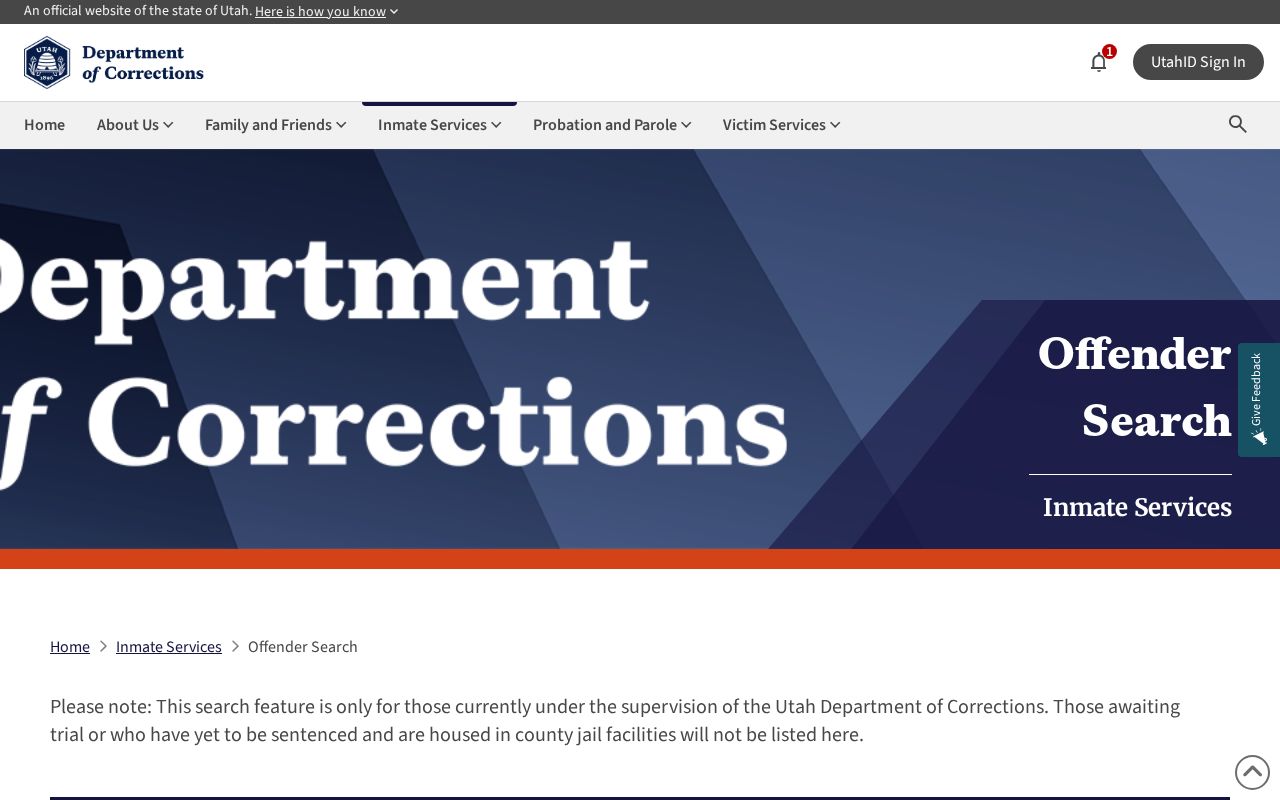
The public profile can include Release Date/Type, but blank or N/A fields are possible and must not be converted into a guessed date.
For a broader custody trail, the Emery County released-inmate lookup explains how the jail record, court docket, UDC profile, and receiving agency fit together.
Note: A person missing from a current roster may have transferred, so absence alone is not proof of release.
Utah Board Sets State Release Dates
Utah's release-date computation is Board-centered. It is not a general rule requiring every prisoner to serve 85 percent. Under Utah Code §77-18-111, a state prison judgment usually runs from a statutory minimum to maximum unless the Board sooner terminates or commutes it. The Board decides when and under what terms a UDC prisoner may be paroled under §77-27-5. Offense-specific minimums and exclusions still apply, but no single percentage supplies every answer.
The Board combines current concurrent and consecutive sentences to define the total minimum and maximum. It considers the judgment, sentence structure, time-served credit, guidelines, hearing record, case material, release plan, and its own order. Concurrent terms run together in the way the judgment permits, while consecutive terms increase the combined span. The first eligible date or first hearing is not a promise of release.
This rule remains in force when a UDC prisoner is contract-housed at Emery County Jail. The county building does not convert the state sentence into a local jail term. Board decisions and UDC status remain the correct release-date sources. By contrast, the Board does not calculate an ordinary county misdemeanor sentence. That local date comes from the court commitment, statutory credit, and Emery County Jail's computation.
Utah Code §77-27-9 supplies the parole authority and eligibility framework. Parole ordinarily cannot come before the statutory minimum. Exceptional before-minimum release requires the findings and public process described by current law. A life-without-parole or death sentence has no parole opportunity. For another indeterminate sentence, the word “eligible” means the Board can consider release, not that release must occur.
No blanket 85-percent rule: Emery County state-prison release dates depend on the sentence and Board action, not one statewide percentage formula.
Emery County Earned-Time Release Credits
Utah Code §77-27-5.4 establishes the earned-time program. UDC's Earned Time Credit Programs explanation states that successful completion of an approved Case Action Plan program produces a mandatory four-month cut. Up to two qualifying completions can yield a maximum mandatory reduction of eight months. A second vocational completion may support discretionary credit rather than another automatic cut. The Board can also consider discretionary cuts for exemplary performance or approved activities.
Credit is neither automatic for every person nor a simple daily good-time formula. UDC says people serving life without parole or a Board-ordered expiration of a life sentence are not eligible. A credit can be forfeited after major discipline, new charges, or rescission. When a release date is already close, transition needs may limit how much of a cut can be used. If no release date exists before an original hearing, or if the case is set for rehearing, the completion may be acknowledged and considered later.
Time served is another part of the calculation. Section 77-18-111 recognizes the Board's authority to grant time-served or other credit in a state case. That does not turn earned time, jail credit, and sentence aggregation into interchangeable terms. Each comes from a different source and can affect the date in a different way.
No official Emery County jail good-time formula or weekend and holiday early-release policy was found in the official sweep. Do not import a policy from another Utah county. For a definite county sentence, ask the jail which credits its projected date includes and compare the answer to the written judgment and commitment.
Note: An earned-time completion may affect a Board date, but it does not prove that release processing has occurred.
Why Emery County Release Dates Change
A future date can move for reasons found in the sentence, Board process, institutional record, or another agency's hold. The effect depends on whether the person is a local Emery County detainee or a UDC prisoner. Ask for the exact record behind any change instead of relying on an old screenshot, message, or calendar entry.
| Factor | Possible effect | Best confirming record |
|---|---|---|
| Concurrent or consecutive sentences | Changes the combined minimum and maximum used by the Board | Judgment and Board starting calculation |
| Time-served credit | May change the credited term or Board calculation | Commitment, court record, and Board order |
| Approved earned time | Can reduce an existing Board date within program limits | UDC completion record and current Board action |
| Major discipline or new charges | Can forfeit credit or lead to rescission and later review | UDC record and Board decision |
| Detainer or agency hold | May turn a jail exit into a transfer rather than community release | Jail release disposition and receiving-agency record |
| Incomplete release plan | Can delay or alter state release arrangements | Current Board order and UDC verification |
| Parole violation process | Can return a released person to custody and change later dates | Board violation or evidentiary decision |
| New court order | Can revise a local sentence, credit, bond status, or release authority | Newest signed court order |
Rescission is especially important. A granted parole date can be withdrawn before the person leaves because of conduct, a conviction, or another issue considered by the Board. Rehearing and redetermination are later review events, not release. Once in the community, an alleged parole violation can create a new custody event and a new Board process.
Tuesday Emery County State Releases
UDC provides unusually clear operational details for state-prison release day. Releases and paroles are normally processed on Tuesdays, mostly at Utah State Correctional Facility. That applies even when a state prisoner had been housed under contract at Emery County Jail. Almost everyone follows the USCF release route. Rare direct releases from a county jail are communicated to the affected support person.
People supporting someone housed at Utah State Correctional Facility or Central Utah Correctional Facility are directed to arrive at the USCF Release building at 9 a.m. For a UDC prisoner housed at a county jail, supporters arrive at 10 a.m. Processing may take one to four hours. These instructions do not apply to an ordinary Emery County bond-out, time-served release, or court-ordered local jail exit.
The official UDC Release Day instructions show the Tuesday process and direct supporters to verify the date first.
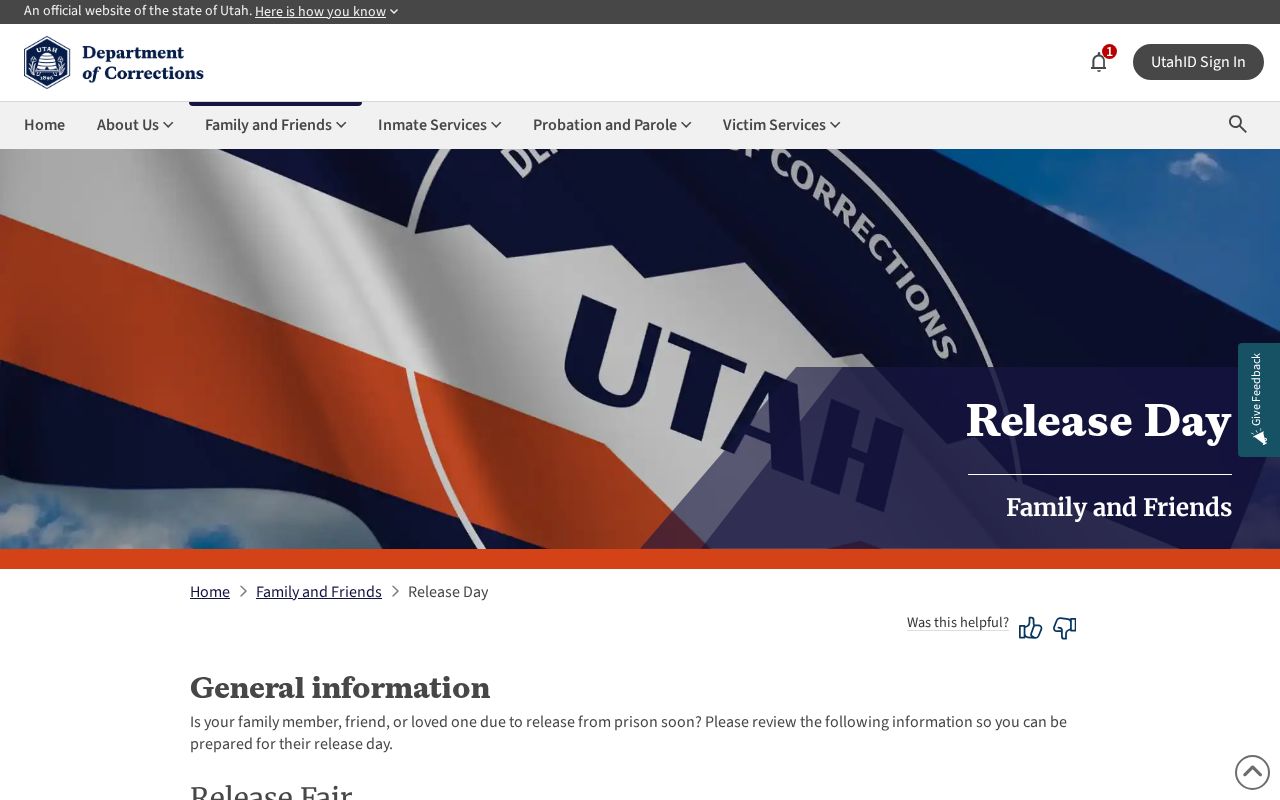
The operational window explains why a valid state release date is still different from the exact time processing finishes and the person leaves.
Pickup rules are specific as well. UDC says no more than two people should arrive in one vehicle, and the person picking up checks in with a name and phone number. If no ride is available, a release-team member or volunteer may provide transport to a UTA TRAX station near USCF on a case-by-case basis. People without rides release last. Again, this is the state route, not a county-jail rule.
Note: Verify the current UDC date before anyone travels because a scheduled date can change before Tuesday processing.
Confirm an Emery County Release Date
For a UDC prisoner, compare three items: the current Release Date/Type field, the latest Board decision, and the actual post-processing custody status. The public UDC profile can show Offender Number, Name, Location, Housing Facility, Release Date/Type, Case Manager, and Case Manager Email, but not every field is populated. A blank or N/A entry does not authorize a date estimate.
For a local Emery County sentence, call the Jail at 435-381-2404 and inspect the court case. Ask whether the date is projected or actual, which credits were included, and whether any hold remains. If the person has already left, request the release date and time, disposition, releasing authority, and destination or receiving agency. That last field separates community release from transfer.
Utah VINE can add a custody-change alert. Registration is useful for notice, but VINE is not a certified release record and technical or reporting delays can occur. The Emery County VINELink Release Check covers a one-person search and notification setup. An important date should still be confirmed with Emery County Jail, UDC, or the Board.
If the inquiry is historical, use the court judgment, Board decisions, or a targeted government-records request. UDC Offender Search is limited to people currently under state supervision, so a fully discharged person may no longer appear. Keep the dates labeled as court order, planned parole, actual exit, supervision start, and sentence termination.