
Emery County Parole Versus Probation
Parole and probation can both place an Emery County resident under Utah Adult Probation and Parole, commonly called AP&P. They are not the same status. Probation comes from a court judgment and usually lets a person serve all or part of a sentence in the community. Parole is conditional release from a Utah prison sentence. The Utah Board of Pardons and Parole decides whether and when parole is granted, and AP&P then carries out field supervision. Physical release on parole does not end the prison sentence. A later Board termination or discharge is the stronger record that the sentence itself has ended.
The source of the status controls where to verify it. For probation, read the judgment, probation order, and later court docket entries. For parole, compare the operative Board order with Utah Department of Corrections status and the assigned AP&P region. Emery County Jail staff can document a jail exit, but cannot replace the Board's parole decision or certify that state supervision has ended.
| Point | Parole | Probation |
|---|---|---|
| Who orders it | Utah Board of Pardons and Parole | Sentencing court |
| Custody link | Conditional release from a prison sentence | Court supervision that may avoid or follow jail |
| Primary proof | Board decision plus current UDC status | Judgment, probation order, and court docket |
| Field supervision | Utah AP&P | Utah AP&P when assigned |
| How it ends | Board termination, discharge, or sentence expiration | Court completion or discharge reflected in the case record |
Several terms help keep the records distinct.
- Parole
- Conditional community release from imprisonment before the sentence has terminated.
- Probation
- Community supervision ordered by a court as part of a criminal judgment.
- Absconder
- A supervised person alleged to have evaded supervision or stopped reporting, not merely any released person.
- Discharge
- The formal end of supervision or sentence authority, shown by the court or Board record.
- Rescission
- Board action that may withdraw a parole date before the planned release occurs.
Verify Emery County Release Supervision
No public statewide probationer roster was identified in the official source sweep. A name missing from the UDC Offender Search also does not prove that supervision ended because that tool is limited to people currently under UDC supervision and may omit a fully discharged former offender. Verification works best as a record chain. Begin with the custody type, then use the office or record that had legal authority over the person's release.
- Classify the case. Decide whether the release followed an Emery County court case, a UDC prison sentence, or only a jail booking. A court case number or UDC offender number helps separate people with similar names.
- Check the court record for probation. Read the judgment and probation order through the correct Justice or District Court route. The docket may also show a warrant, later modification, completion, or discharge.
- Check UDC for active state supervision. The official UDC Offender Search accepts a name or offender number. A live profile may show PAROLE or PROBATION as the location, but fields are not filled for every person.
- Search Board records for parole. Use the Board Search Hearings & Decisions by first and last name, offender number, or date range. Read the decision itself rather than treating a hearing date as a release.
- Confirm the responsible office. Contact AP&P Region 6 or the Emery County Adult Probation directory number with the identifiers available. Staff may restrict person-specific details.
- Match the dates and terms. Separate the jail exit, parole start, probation order, review date, and final discharge. They answer different questions.
The Board search form makes those distinct search routes visible. The official Utah Board search is shown below.
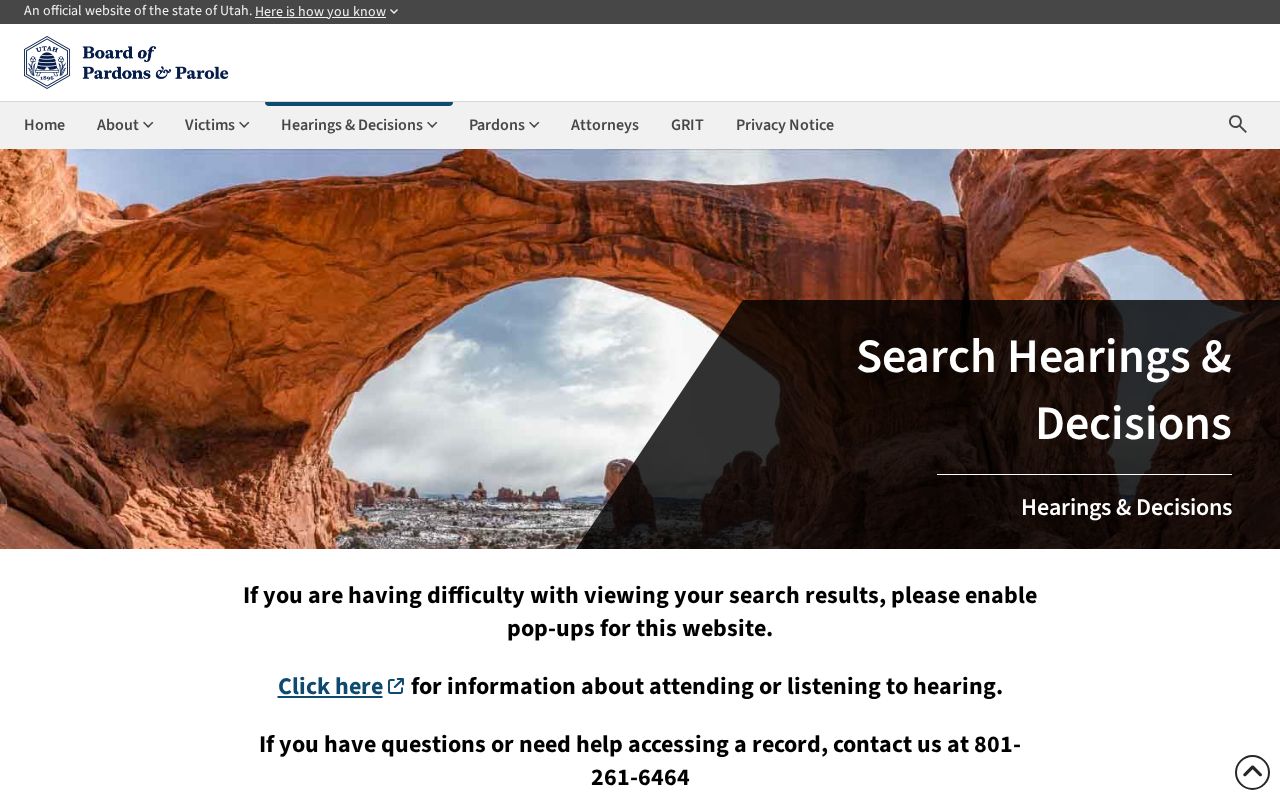
A matching result can lead to a published order, but a scheduled hearing alone does not establish that an Emery County parole release occurred.
Important: “Not in jail” does not establish parole, probation, or discharge. It may also mean bond, time served, transfer, or another custody change.
Emery County Parole Decision Records
The Utah Board of Pardons and Parole controls release on parole from Utah prison terms. Its live search serves as both a calendar and a decisions interface. First and last name are required for a name search, while middle name is optional. An offender number is often the best identifier. A date-range search can return hearings and prior decisions in a chosen week, and known aliases may match.
Record labels must be read with care. An original hearing is the first Board hearing for an eligible indeterminate prisoner. A rehearing or redetermination means the case will receive later review. A granted parole date is a future authorization, still subject to the stated terms and possible rescission. A paper review may produce an order without an ordinary hearing. A termination or discharge has a different effect because it ends parole or sentence authority rather than merely allowing the person outside prison under supervision.
The Board's hearing and review definitions also distinguish parole-violation, evidentiary, rescission, and special-attention matters. Live hearings follow a separate schedule. Salt Lake streams run Monday through Thursday, Gunnison streams run Tuesdays, and a county-jail hearing may be entirely online. Broadcasts have been audio-only since March 17, 2025. The person search identifies which calendar and decision apply.
Utah does not use a fixed 85-percent parole eligibility rule for every offense. Indeterminate sentences, mandatory minimums, Board authority, sentence structure, and the record before the Board all matter. The Emery County inmate release date page separates those calculations from the supervision that starts after release.
Note: A guideline date or hearing date is not an order to release an Emery County state prisoner.
Emery County Supervision Office Routes
Emery County has a useful two-level contact path, which is the page's distinctive local supervision detail. The county department directory lists an Adult Probation number for local routing. UDC identifies the formal AP&P Region 6 office in Price for Carbon County, Emery County, and eastern Wayne County. Since no official public probation roster was found, these contacts must be combined with the court order for probation or the Board decision for parole.
Utah AP&P Region 6
1365 South Carbon Avenue
Price, UT 84501
435-636-2800
Call before traveling because official office hours were not located.
Emery County Adult Probation
435-381-2143
Use the county directory contact for local routing; access to person-specific details may be limited.
UDC also lists its AP&P division line as 801-545-5908. The Region 6 Treatment Resource Center uses the Price address, but that fact does not promise eligibility, placement, or a specific service. Ask which office holds the case and what record can confirm present status.
The official AP&P regional page shows the Region 6 Price contact and supervision framework.
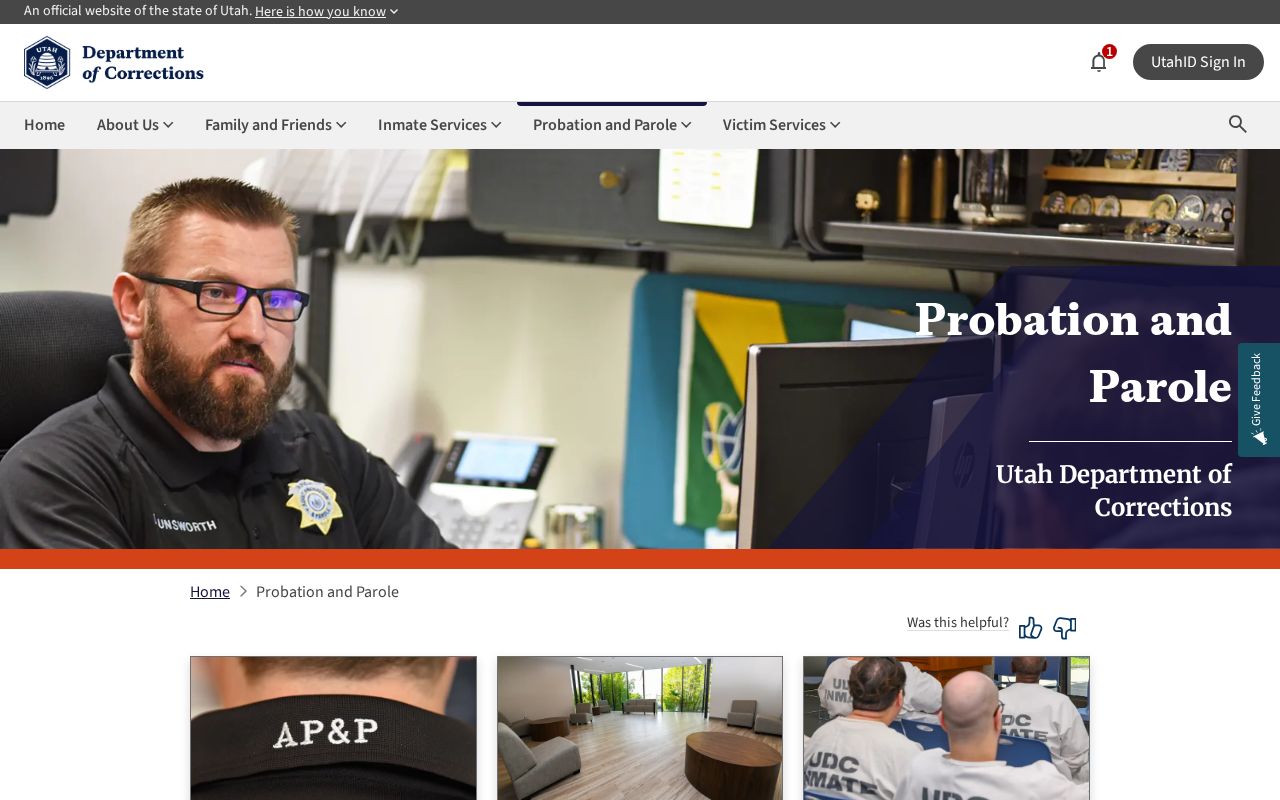
The regional listing confirms where Emery County parole and probation questions are routed even though it does not function as a public person search.
Emery County Parole Violation Status
Conditions come from the controlling order and case. They can require reporting and compliance with directions, but only the person's order and supervising agency establish the actual terms. A court addresses probation under its jurisdiction. The Board handles parole authority, while AP&P reports and supervises in the field. General web descriptions should never be substituted for the signed order.
An absconder is a person alleged to have evaded supervision. It is not another word for someone who was lawfully released. No official Emery Sheriff public absconder or warrant list was located. A court docket may show a probation warrant. For parole allegations, Utah Code §77-27-11 authorizes the Board's violation process. A parolee confined on suspicion of a violation may not be held for more than 72 hours without a warrant, excluding weekends and holidays.
Board records can distinguish a violation hearing from a final revocation result. An evidentiary hearing addresses disputed facts. Other results can include dismissal, reinstatement, sanctions, or further Board action. Until a current order is found, do not infer the outcome from an arrest, a missed search result, or an old hearing entry.
Note: A supervision violation can return someone to custody, so always check the newest court or Board action.
Emery County Release Alert Limits
Utah VINE can send custody-change alerts, including release, transfer, escape, return, death, and some UDC movements. It is a notification service, not a certified parole or probation record. Registration can be made through VINELink Utah or by calling 1-877-884-8463. The service may show whether a date is available, but UDC warns users not to rely on VINE alone.
Registries are narrower still. Utah's Sex and Kidnap Offender Registry and Child Abuse Offender Registry apply only when a person has a legal duty to register. Presence there does not mean current jail custody. Absence does not show that a random released person is off supervision. For Emery County parole, use the Board order and AP&P. For probation, use the court order and the proper supervision contact.
A person-specific custody search can help when a new detention may have interrupted supervision, but the full Emery County released-inmate search path should be used to distinguish a community release from a transfer or return to custody.
Emery County Supervision Discharge Records
Release from a cell and discharge from supervision are separate events. A parolee remains under the prison sentence until the Board terminates or discharges that authority, or until another lawful end reflected in the official record. Utah Code §77-27-12 governs Board discharge and sentence termination. The published Board decision is therefore more useful than an old release alert when the question is whether parole has ended.
For probation, review the sentencing court's docket for completion, termination, modification, or a later warrant. The original probation order proves that supervision began but may not state what happened later. Ask the correct clerk for the current order when an online view lacks the document. Justice Court handles qualifying lower-level Emery County matters, while felony and other district matters belong with the Seventh District Court.
Keep each milestone labeled: actual jail exit, parole or probation start, review or hearing, and final discharge. If a public UDC profile disappears, that may be consistent with full discharge, but it is not enough on its own. A Board termination order or court discharge entry provides the direct proof.
Scheduled versus complete: A future termination, review, or hearing date can change. Confirm the newest signed order before treating Emery County supervision as finished.
Note: Physical freedom under conditions is not the same event as the legal end of a sentence.